
Main Menu
Flyout Menu
In Central Florida, your irrigation system isn’t just a convenience; it’s the life support system for your landscape. Our sandy soil, intense subtropical sun, and thirsty turf varieties (like St. Augustine grass) mean that even a few days without water can turn a lush green oasis into a crispy, brown eyesore.
At Hessenauer Sprinkler Repair and Irrigation, we’ve seen it all. From Orlando to Sanford, and Winter Park to Clermont, we deal with the unique challenges that the Florida environment throws at sprinkler systems. While some issues are obvious “geysers” in the front yard, others are subtle, silent problems that drive up your water bill and slowly kill your grass.
This guide is designed to be a comprehensive resource for homeowners. We are going deep into the real-life issues, the symptoms you might see, and the underlying causes of common irrigation failures.
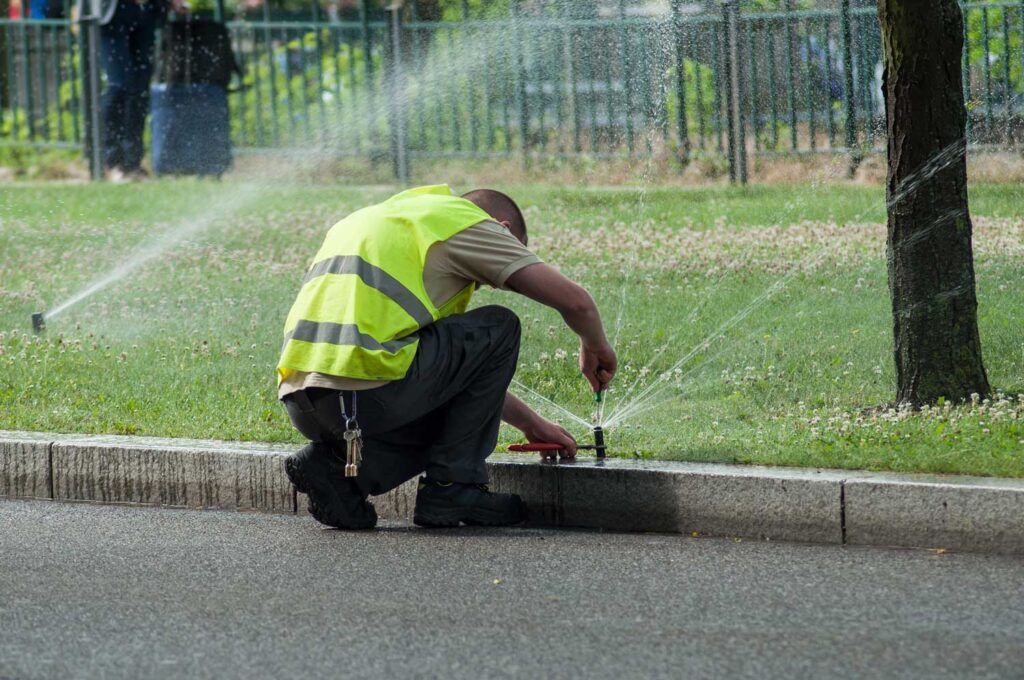
The most noticeable problems are usually physical breakdowns of the system’s components. These range from minor annoyances to major catastrophic leaks that can waste thousands of gallons of water.
This is the classic irrigation problem. You turn on zone 3, and suddenly you have a version of Old Faithful erupting in the middle of your lawn.
The Real-Life Issue: Sprinkler heads are exposed to the elements and physical abuse. In Central Florida, the intense UV rays eventually make the plastic casings brittle. A head that lasted 10 years in Ohio might only last 5 years here.
However, the most common cause of a broken head is mechanical damage. This usually happens when a lawnmower blade clips a head that hasn’t fully retracted or was installed too high. It also happens when cars drive over heads located near the driveway edge.
The Symptoms:
The Florida Factor: Because our soil is so sandy, a broken head can wash away a significant amount of dirt very quickly, creating a sinkhole hazard around the break.
Your irrigation valves are the traffic cops of the system. They open and close to let water flowing to specific zones. When they fail, they usually fail in a way that lets water seep through when it shouldn’t.
The Real-Life Issue: Valves are usually located underground in valve boxes. They can fail due to age, but often it’s due to debris. In our area, small pieces of shell, grit, or mineral buildup from hard water get stuck in the valve’s diaphragm. This prevents the valve from sealing completely shut.
The Symptoms:
Why It’s Dangerous: A weeping valve is a 24/7 leak. It not only skyrockets your water bill but the constant saturation will rot the roots of St. Augustine grass and invite fungus.
This is one of the most frustrating issues because you often cannot see the source of the problem. The PVC pipes carrying water beneath your lawn can crack or snap.
The Real-Life Issue: Line breaks happen for several reasons. Tree roots are a major culprit here in established Central Florida neighborhoods; a large oak root can easily crush or lift a PVC pipe. Construction digging (like installing a fence or cable line) is another common cause. Sometimes, it’s just old, brittle glue joints giving up.
The Symptoms:
Your irrigation system is a hydraulic machine controlled by an electrical brain. When the electronics fail, the water doesn’t flow.
If you live in Central Florida, you know we are the lightning capital. This is a major enemy of irrigation controllers.
The Real-Life Issue: A lightning strike doesn’t have to hit your house directly to fry your controller. A nearby strike to the ground can send a surge through the wiring in the yard back to the controller mounted in your garage or on the side of your house. We see a massive spike in calls for “dead controllers” after heavy summer afternoon thunderstorms.
The Symptoms:
The display screen is blank.
The screen shows gibberish code or is frozen.
The system runs erratically—turning on at the wrong times or skipping days.
You smell a faint “burnt electronics” odor near the timer.
Every valve in your yard is connected to the controller by wires buried underground. These wires are vulnerable.
The Real-Life Issue: The most common wiring issue we see is corrosion at the splice points where the wires connect to the valves in the wet underground environment. If waterproof wire connectors weren’t used during installation, corrosion is inevitable. We also see damage from rodents chewing wires, or shovels accidentally cutting them during gardening.
The Symptoms:
One specific zone stops working entirely, while others work fine.
The controller indicates a “Fault” or “Err” message for a specific zone number.
Rain sensors are mandatory on automatic systems in Florida. They are supposed to shut off the system when sufficient rain has fallen, saving water and preventing over-saturation.
The Real-Life Issue: Rain sensors rely on small cork discs that expand when wet to break an electrical connection. Over time in the Florida sun, these corks dry out, crumble, or get clogged with pollen and debris.
The Symptoms:
System runs during a downpour: The most obvious sign the sensor has failed.
System never runs: Conversely, if the sensor fails in the “wet” position, your system will never turn on, and your grass will start to brown.
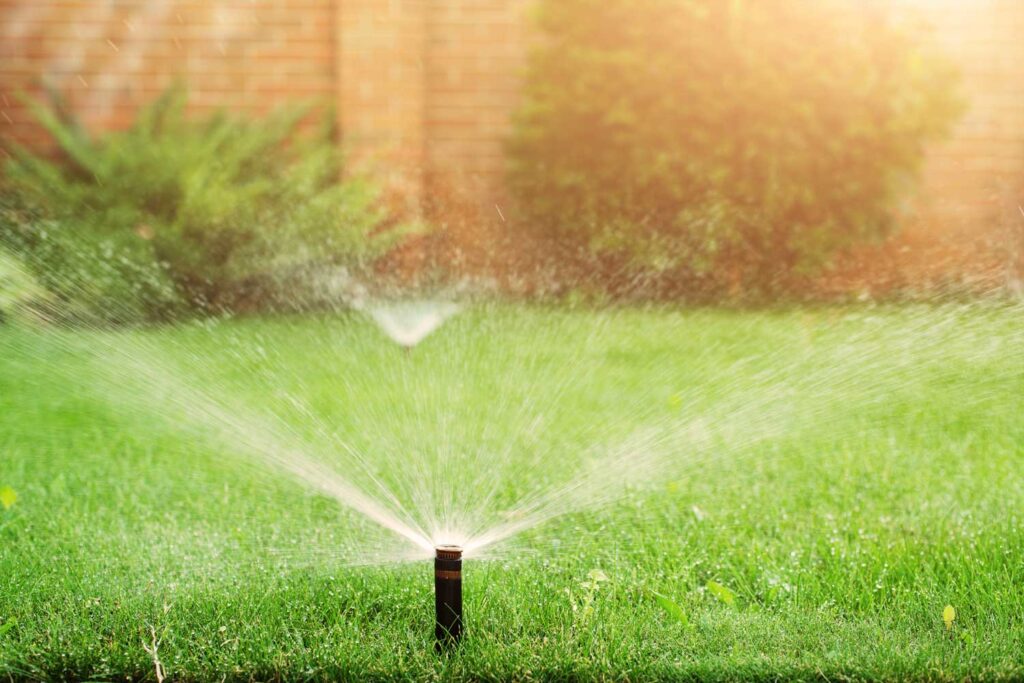
Often, the system turns on, heads pop up, and it looks like it’s working. But your lawn tells a different story with brown patches, yellowing areas, or fungus. These are coverage issues.
The water in Central Florida, especially if you are on reclaimed water or a shallow well, can contain sediment, algae, and fine sand.
The Real-Life Issue: Sprinkler nozzles have tiny orifices engineered to throw water in a specific pattern. It only takes a tiny grain of sand to disrupt that pattern. Most heads have small filter baskets underneath them, and when these fill with grit, water flow stops.
The Symptoms:
A spray head that is only spitting or dribbling water instead of spraying a fan pattern.
A rotor head that isn’t turning (rotating).
Dry, brown crescent shapes in the lawn where the spray pattern is blocked.
For sprinklers to work, they need specific water pressure (psi). If it drops, performance plummets.
The Real-Life Issue: Low pressure can be caused by a leak in the line (as mentioned earlier), but it can also be a supply issue. If you are on city water, peak usage times (like 5:00 AM when everyone’s system turns on) can drop pressure. If you have a pump system, the pump may be wearing out or the well screen may be clogged.
The Symptoms:
Pop-up heads don’t fully extend out of the ground.
Rotor heads shoot a weak stream that doesn’t reach its intended distance, leaving dry spots further out in the zone.
The spray pattern looks weak and droopy rather than crisp.
Conversely, too much pressure is also bad. This is common in certain municipal water areas in Central Florida where street pressure is very high.
The Real-Life Issue: If the pressure is too high for the nozzle rating, the water exits so fast that it atomizes into a fine mist or fog.
The Symptoms:
Misting: You see a cloud of fine mist hovering over the sprinklers rather than streams of water hitting the ground.
Drifting: This mist is easily blown away by even a gentle breeze, meaning the water never lands on the grass it’s supposed to water. It ends up on your driveway, sidewalk, or neighbor’s yard.
The area right around the head is soaking wet, but areas three feet away are bone dry.
This is highly specific to our sandy environment.
The Real-Life Issue: When sprinklers run, the vibration and water flow can slightly shift the sandy soil around the sprinkler body. Over months and years, the heavy sprinkler body begins to sink deeper into the ground. Alternatively, heavy foot traffic or mowers can push them down or tilt them.
The Symptoms:
Sunken Heads: The head is so deep in the thatch of the grass that when it pops up, the nozzle is still below the grass blades. The water just hits the surrounding grass and puddles, never spraying outward.
Tilted Heads: The head is spraying at an angle, shooting water high into the air on one side and blasting the dirt directly in front of it on the other.
We love seeing homeowners take an interest in their systems. Some of these issues are simple fixes. Cleaning out a clogged nozzle or replacing a rain sensor is within the skill set of many handy homeowners.
However, many irrigation problems in Central Florida require specialized diagnostic tools and expertise. Finding a hidden underground leak without destroying your yard, diagnosing electrical faults that span hundreds of feet of buried wire, or properly calculating hydraulic flows to fix pressure issues are jobs best left to professionals.
If your system is showing symptoms of these common problems, and you want to ensure it’s fixed correctly the first time, it’s time to call in the experts. At Hessenauer Sprinkler Repair and Irrigation, we have the experience and the equipment to tackle the toughest Central Florida irrigation challenges.
Protect your landscape investment. Don’t let a small leak turn into a dead lawn.
For more information on water conservation and landscaping in our area, we recommend these authoritative sources:
EPA WaterSense: Information on water-efficient irrigation products and practices. Link to EPA WaterSense Outdoors
St. Johns River Water Management District: Crucial information regarding watering restrictions and water conservation rules in our region. Link to SJRWMD Watering Restrictions
Rain Bird Homeowner Resources: Excellent guides and support for common irrigation components. Link to Rain Bird Support
